
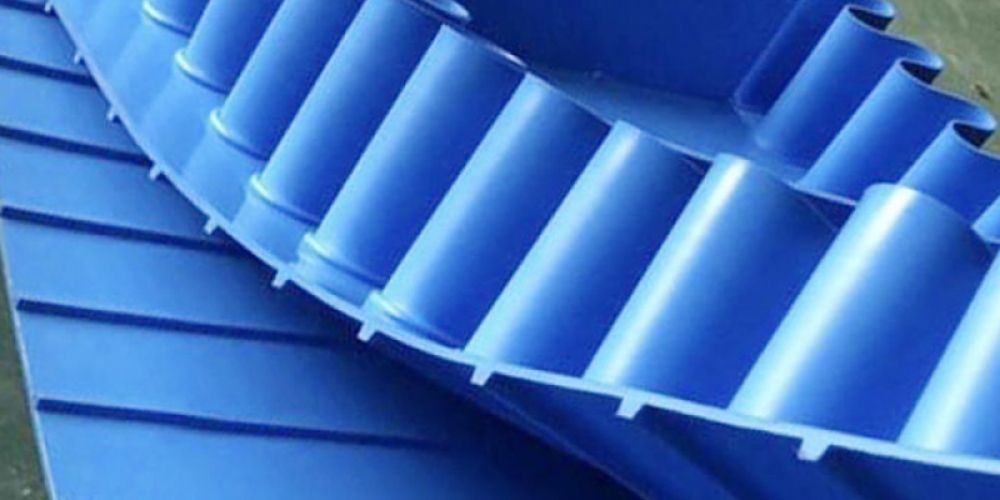
Lightweight conveyor belts are a type of lightweight solid material conveyor belt primarily including PVC belts, PU belts, and rubber-plastic composite belts. They are widely used across industries such as food processing, logistics, electronics, tobacco, woodworking, stone processing, fitness equipment, and more.
Lightweight conveyor belts are typically constructed by interweaving warp and weft polyester fibers into a base material, which is then composited with rubber, PVC, PU, PE, or other polymers. This structure provides excellent adhesion, physical durability, chemical resistance, and mechanical properties. Depending on operational requirements, these belts can also be designed with specialized features such as flame retardancy, anti-static properties, or food-grade certification.
During installation and operation, critical details must be observed. For example:
Lightweight conveyor belts offer a highly efficient and adaptable material-handling solution, meeting diverse industrial demands. Key adjustments require attention to:
.jpg)
Skirted baffle conveyor belts are a special type o…
.jpg)
Polyurethane (PU) conveyor belts possess numerous …
The safety of conveyor belt materials in the food …
Lightweight conveyor belts are a type of conveyor …
