
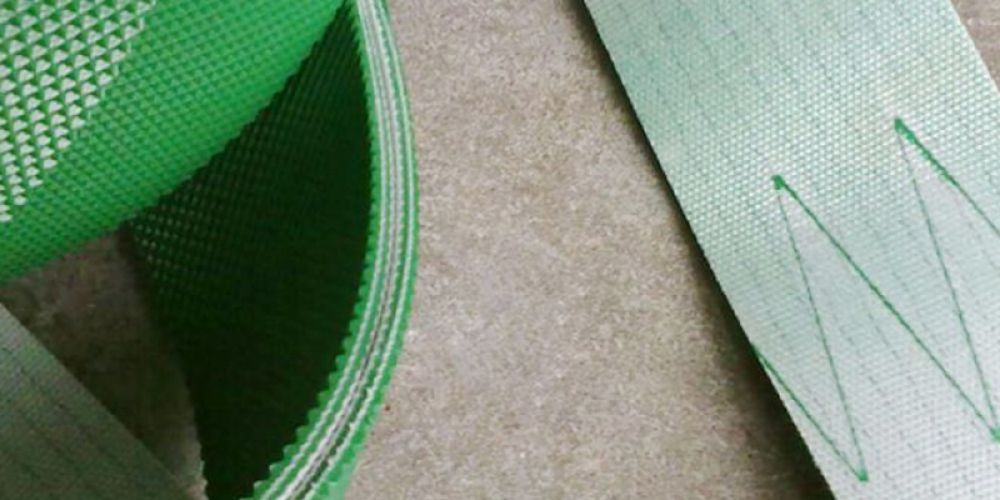
The main joint methods for PVC conveyor belts include the following types:
1. Tooth Joint:
A common and the most secure joint method for PVC conveyor belts. The PVC conveyor belt is first stratified and then teeth-shaped cuts are made, resembling the shape of teeth, hence the name "tooth joint." Features include simplicity, convenience, and fast hot-melting speed. The bonded joint distributes stress evenly, making the conveyor belt easier to clean.
2. Layered Tooth Joint:
A common method for joining looped conveyor belts, it enhances joint strength and effectively prevents issues like teeth lifting at the joint.
3. Lap Joint:
Used when machine disassembly is inconvenient. This involves stratifying the belt with a layering machine followed by special grinding treatment.
4. Steel Fastener Joint:
A detachable and reusable method. Pros: avoids installation difficulties after forming the conveyor belt into a loop. Cons: harder to clean (prone to bacterial growth), and prolonged use may lead to gradual tearing at the joint, resulting in a shorter lifespan.
5. Plastic Fastener Joint:
Primarily used in specialized environments, such as replacing metal-detection-compatible conveyor belts.
Additionally, there are mechanical joints, cold adhesive joints, and thermal vulcanization joints. In practical applications, the choice of joint method should be based on actual needs and conditions.
.jpg)
Skirted baffle conveyor belts are a special type o…
.jpg)
Polyurethane (PU) conveyor belts possess numerous …
The safety of conveyor belt materials in the food …
Lightweight conveyor belts are a type of conveyor …
