
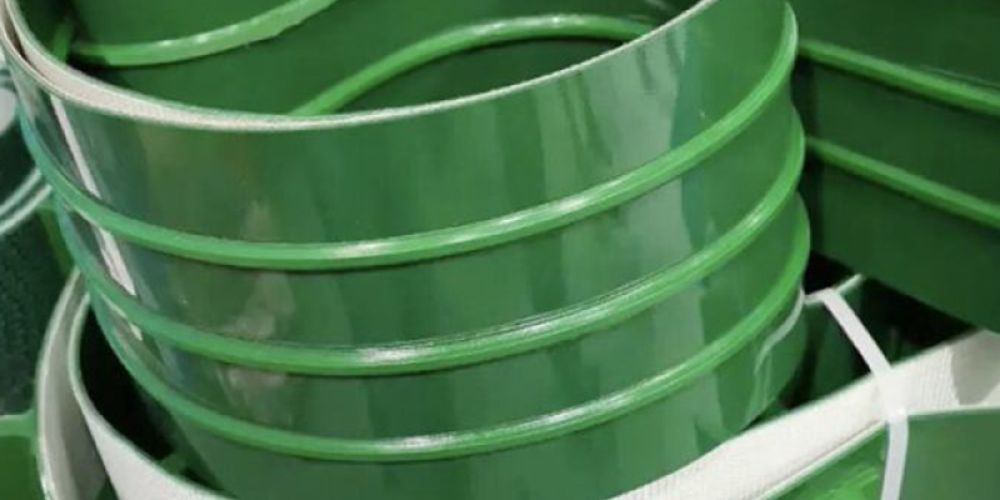
I. Different types of cleats and skirt designs in belt conveyor systems serve unique functions:
PVC and PU Cleats:
These lightweight and easy-to-install cleats offer excellent chemical corrosion resistance and wear resistance. They are suitable for diverse environments, including food processing, pharmaceutical production, and chemical industries. PVC and PU cleats effectively prevent material spillage during conveying and enhance material adhesion to the belt.
T-shaped Cleats:
T-shaped cleats can be selected and adjusted based on practical needs.
S-shaped Skirt Cleats:
This design prevents material slippage during conveying while improving adhesion. Skirt cleats are typically taller than straight cleats, offering better adaptability to materials of varying shapes and sizes.
Guide Strips:
Low-profile guide strips enhance material stability on the belt by reducing rolling or sliding. Their design prevents material misalignment during transport, improving conveying efficiency.
Summary:
Cleats and skirt designs on the belt surface significantly enhance conveying efficiency, stability, and safety. Selecting appropriate designs based on specific applications and material characteristics optimizes production processes and boosts productivity.
II. Application Scenarios for Straight, Angled, and Custom-shaped Cleats
Straight Cleats:
Ideal for preventing material deviation from the belt. These cleats effectively contain materials laterally during transport, ensuring stable delivery. Commonly used in horizontal/vertical conveyors, particularly for short-distance or high-speed conveying.
Angled Cleats:
Suited for redirecting or guiding materials. Angled cleats steer materials at predefined angles, enabling flow splitting or merging. Typically applied in inclined conveyors to direct materials to specific locations or orientations, ideal for sorting or combining material streams.
Custom-shaped Cleats:
Designed for irregularly shaped or sized materials. Their unique profiles accommodate variations in material geometry (e.g., round, flat) to prevent rolling or slipping. Widely used in food processing, chemical, and pharmaceutical industries requiring specialized material handling.
.jpg)
Skirted baffle conveyor belts are a special type o…
.jpg)
Polyurethane (PU) conveyor belts possess numerous …
The safety of conveyor belt materials in the food …
Lightweight conveyor belts are a type of conveyor …
