
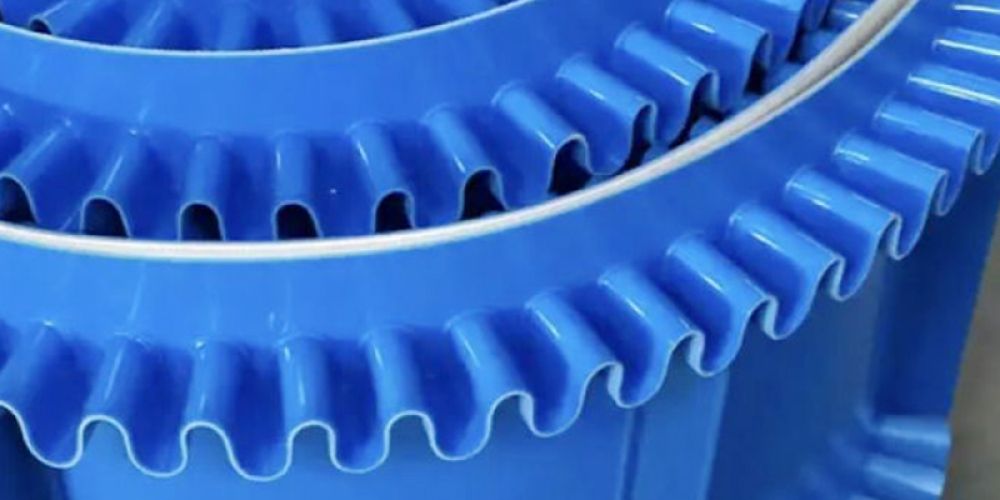
Flanged and Baffle Conveyor Belt
A flanged and baffle conveyor belt is a specialized type of conveyor belt that combines the dual functions of sidewalls (flanges) and baffles. It is typically constructed with heavy-duty, wear-resistant canvas or polyester fabric as the load-bearing surface, paired with various sidewalls and baffles to achieve diverse conveying effects.
Sidewall (Flange) Design
The key feature of this conveyor belt is its sidewall design. The flanges prevent material spillage during transportation, enhance material adhesion to the belt, and ensure stable conveying. They also protect the belt from abrasion caused by materials.
Baffle Options
Baffles can be customized based on requirements. Common types include:
Wide Applicability
Suitable for transporting bulk materials such as coal, ore, sand, fertilizers, and grains. Its specialized design accommodates various material properties, improving conveying efficiency.
Easy Maintenance
Maintenance involves regular inspections for wear, timely replacement of damaged sections, and keeping the belt clean.
Prevent Material Spillage
The flanges increase friction between the material and the belt, ensuring better adhesion and preventing slippage during high-speed or steep-angle conveying.
Protect the Belt
The flanges shield the belt from direct impacts and abrasion caused by materials or debris, extending its lifespan.
Control Material Width
Adjusting the flange width and tilt angle allows precise control over material spread, enabling directional conveying and flow separation.
Enhance Efficiency
Stable material flow, reduced spillage, and minimized accumulation result in higher conveying efficiency.
.jpg)
Skirted baffle conveyor belts are a special type o…
.jpg)
Polyurethane (PU) conveyor belts possess numerous …
The safety of conveyor belt materials in the food …
Lightweight conveyor belts are a type of conveyor …
